Blog
How to Build an Effective Marketing Strategy in 2026 [Startups & SMBs]
In 2026, “doing marketing” is not posting more or spending more on ads. It means designing a system: a clear message, coherent channels, a measurable funnel, and data that supports decisions instead of guesses. Startups and SMBs that grow consistently do not stack random tactics — they align brand, website, acquisition, and follow-up toward one business goal.
At Pont Digital, we support companies across Canada and the United States with performance-oriented digital marketing: qualified leads, SEO, automation, and AI applied with judgment. This guide outlines what your 2026 plan should include and which mistakes burn budget fastest today.
What changed in digital marketing (and why your plan needs an update)
Three forces shape 2026 strategy:
- First-party data and trust: less reliance on third-party cookies; more value in owned lists, CRM, forms, and clear consent.
- AI as accelerator, not replacement: drafting, segmentation, chat, and analysis — always validated by humans and tied to real KPIs.
- Fragmented discovery: Google still matters, but so do social, short video, recommendations, and assisted search; your message must be recognizable everywhere.
If your last marketing plan predates these shifts, you may be optimizing vanity metrics. For how psychology and offer design influence decisions without feeling like “ads,” see also invisible marketing.
Startup and SMB marketing is not enterprise marketing
With limited budget and team, you need to learn fast: clear hypotheses, small tests, scale what works. You cannot copy a multinational’s content calendar — but you can copy their discipline: define audience, value proposition, and funnel before increasing ad spend.
At Pont Digital we structure this as growth systems (acquisition, traffic, conversion, automation, brand) instead of generic packages — because early-stage every dollar should answer a specific business question.
Why you need an integrated strategy (not just campaigns)
A marketing strategy is the roadmap that aligns the team: what you promise, to whom, through which channels, and how you know you are progressing. Without it, strong traffic with weak sales, large followings with few leads, and expensive ads with low-converting landings are common.
✅ Shared direction and prioritized resources.
✅ Faster adjustments when markets or algorithms shift.
✅ Intentional brand growth instead of accidents.
Key components of an effective 2026 marketing plan
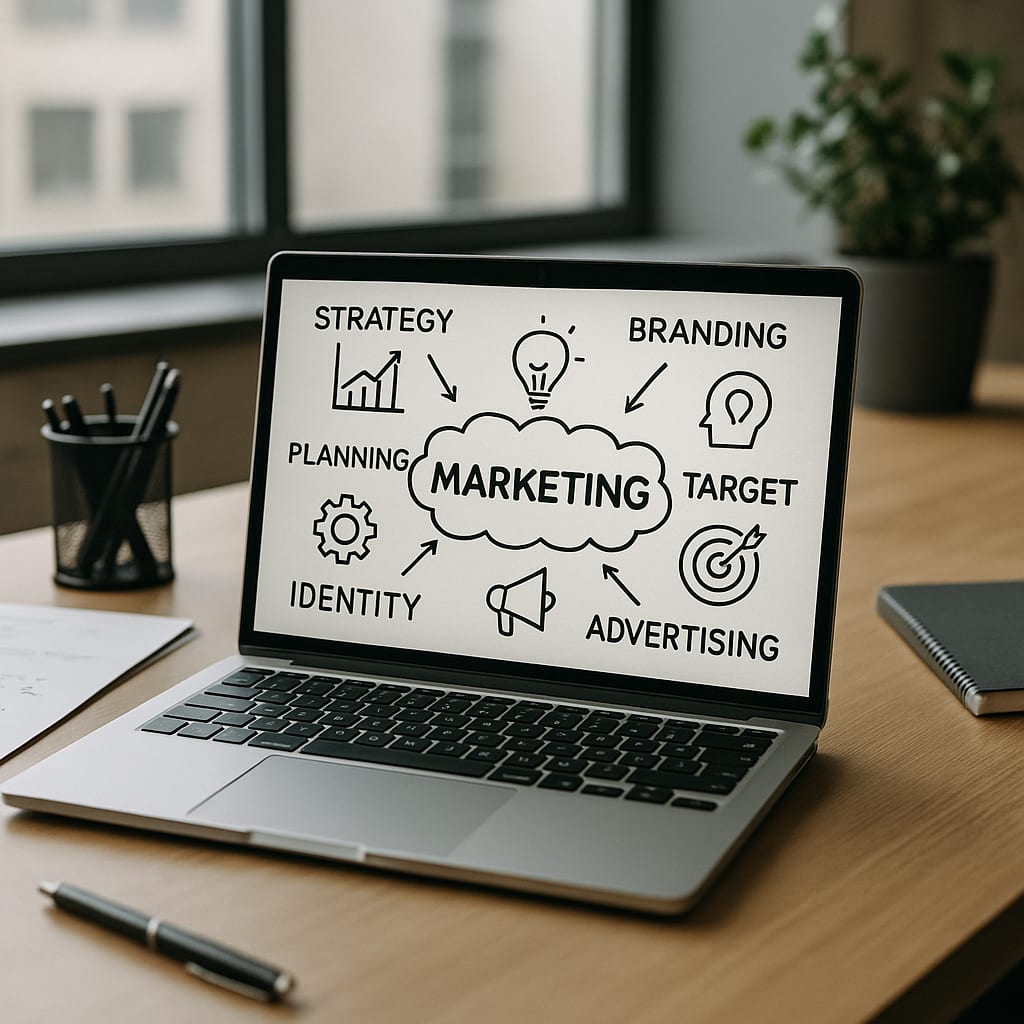
- Identity and positioning: problem solved, for whom, and why you vs alternatives. Foundation for branding and copy.
- Ideal customer (ICP) and messaging: segments, pains, objections, aligned proof — not “everyone.”
- Central digital presence: a website that explains, filters, and converts — not a static brochure.
- Funnel and offers: lead magnet, consult, demo, or purchase — clear steps and forms that balance volume and quality.
- Channels with defined roles: SEO for sustained demand; paid for speed and testing; organic for trust; email/automation to nurture and close.
- Measurement and CRM: from first click to contact and sale; without this, there is no real optimization.

Goals you can actually manage: SMART and north-star metrics
Avoid vague goals (“more visibility”). Use SMART criteria: specific, measurable, achievable, relevant, time-bound. Example: “Increase qualified organic leads by 25% in six months” vs “improve SEO.”
Add a business-linked north-star metric (revenue, margin, LTV, or qualified sales meetings) and supporting metrics: qualified traffic, form conversion rate, CPL, lead response time, and close rate.
Channels in 2026: how to combine them without spreading thin
SEO and content: answer real ICP questions; prioritize service pages, cases, and intent-driven articles — not keyword volume alone.
Performance ads: Meta, Google, or others where your audience lives; require aligned landing pages and event tracking.
Organic social: consistency and proof of expertise; always link back to your site or owned list.
Email and automation: post-lead sequences, reminders, reactivation — critical so paid opportunities are not wasted.
Partnerships and referrals: low cost, high trust when the product supports it.
Practical rule: master one or two channels before opening five. Strategy sets order; execution validates with data.
AI in your strategy: where it helps and where it does not
In 2026, AI supports audience research, drafts, call summaries, chat lead scoring, and campaign pattern detection. It does not replace strategy or brand promise — generic “AI-optimized” copy erodes trust.
Use it to speed iteration and personalization with clear limits (human review, data policies, client transparency). Pont Digital adds AI to sales and marketing flows only when a funnel and metrics prove impact.
Lead generation and conversion: the bridge between marketing and sales
Without lead generation and conversion, marketing stops at impression reports. Define a qualified lead, response SLAs, and what automation runs before human contact.
In 2026, native Meta forms, CRM (e.g. GoHighLevel), AI chat, and follow-up sequences are often one system — not isolated tools.
Common mistakes (and how to fix them)
- Running ads without aligned message and landing page.
- Measuring only clicks or followers instead of the full funnel.
- Changing strategy every two weeks without enough data.
- Copying competitors without adapting positioning or operations.
- Hiring agencies on price or unrealistic promises alone — see how to choose an internet marketing company.
From guide to execution: next step with Pont Digital
An effective 2026 marketing strategy is not a pretty document — it is a living system: brand, web, acquisition, data, and continuous improvement. To turn this guide into a plan with visible metrics and execution in English, Spanish, or French, let’s talk.
Book a conversation with Pont Digital to set priorities, channels, and KPIs for your stage — no one-size-fits-all packages, focus on growth you can measure.
Turn insights into measurable growth
Book a strategy conversation with Pont Digital. We help startups and SMBs across Canada and the U.S. with SEO, leads, and conversion-focused marketing.